
Issues Regarding the Introduction of “Green” Technologies in Greenhouse Farms Were Discussed
2026-10-13 18:15:00 / News
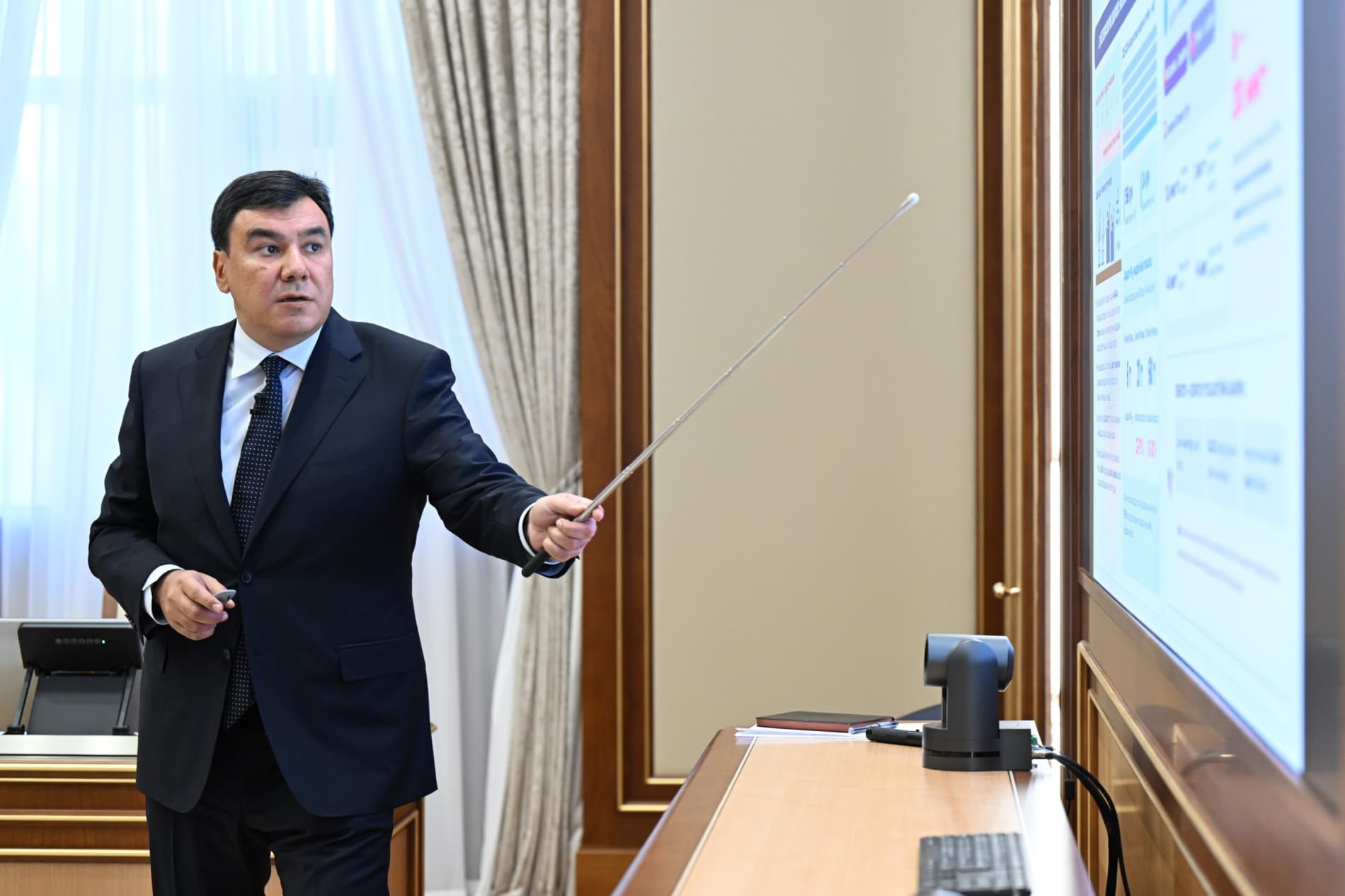
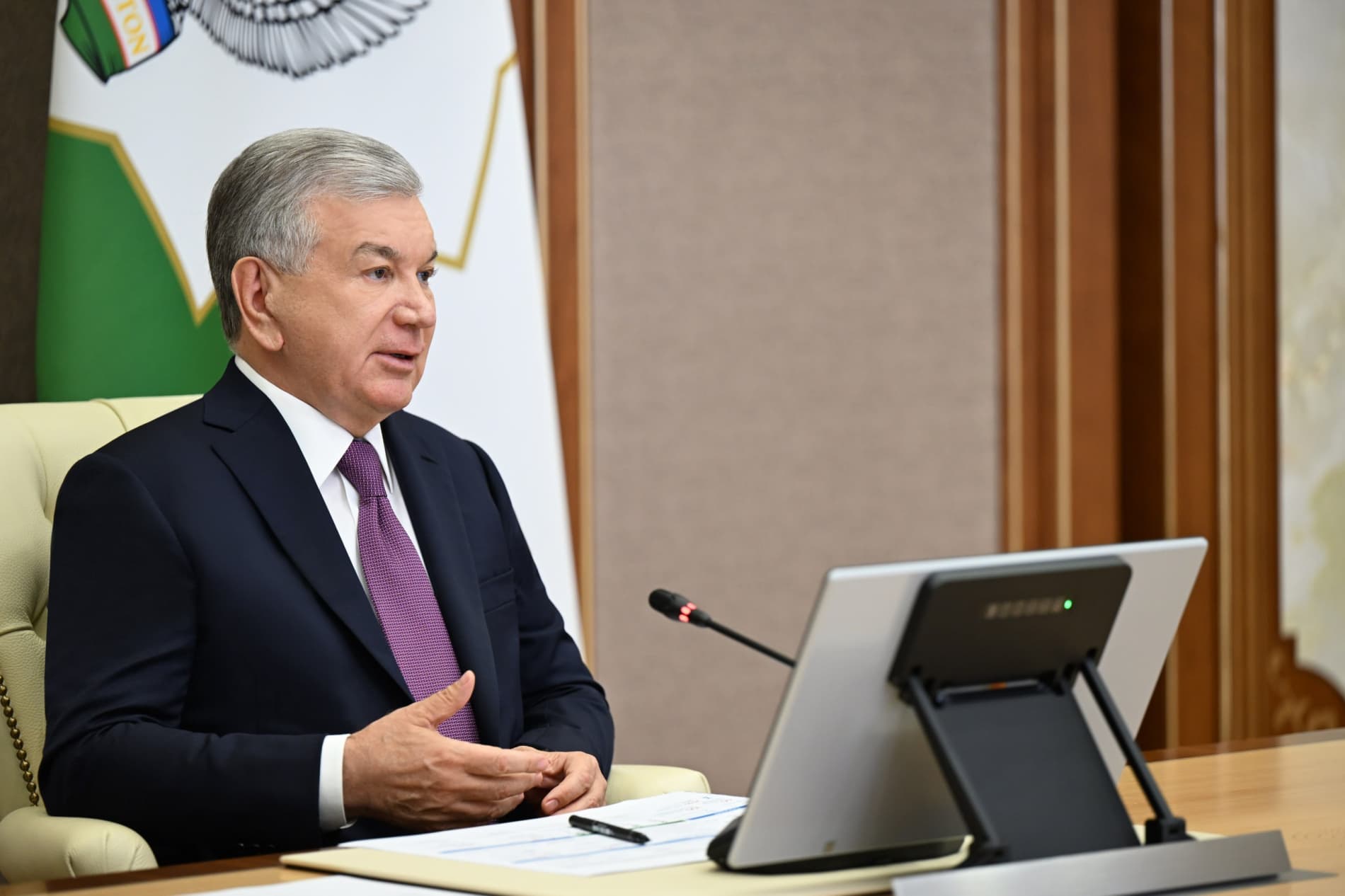
The presentation began with an assessment of greenhouse facilities in Tashkent and the surrounding areas. Last year, a special commission conducted an inventory of greenhouses and assisted some operators in switching to environmentally friendly energy sources. However, coal is still used by certain greenhouse operators.
During the autumn and winter months, when wind speeds decrease and temperature inversions occur, emissions from greenhouse operations can accumulate in Tashkent and its surrounding areas.
In response, a special environmental regime based on green technologies has been proposed for greenhouse operations in Tashkent and five surrounding districts. Under the proposed regime, heating would be permitted using natural gas, electricity, geothermal and solar energy, as well as waste heat from thermal power plants. The burning of tyres, plastics, bitumen, heavy fuel oil, used oils and waste would be prohibited.
Greenhouses currently operating on solid fuels have been proposed to switch to the specified energy sources by 1 December this year. The use of solid fuels may be permitted only for facilities that meet strict technical requirements. These include storing fuel in enclosed premises, installing automated boilers and efficient dust and gas purification systems, providing a backup generator, ensuring the safe collection of ash and slag and complying with established standards for chimney height.
Continuous environmental monitoring of greenhouse facilities will be conducted from 15 October this year to 15 March next year. Monitoring will cover the operation of dust and gas purification equipment, atmospheric emissions and compliance with requirements governing the types of fuel used. Data from measuring instruments and video surveillance systems will be transmitted to the information system of the National Committee on Ecology and Climate Change in real time. Drones will also be used, and members of the public will be involved in the monitoring process.
Where dust and gas purification equipment is absent, emission limits are exceeded or prohibited fuels are used, enforcement measures will be taken in accordance with established procedures. Where necessary, greenhouse operations will be suspended.
Financial support measures have been developed to help greenhouse operators adapt to the new requirements. It has been proposed that subsidies of up to 50 million sums per hectare be provided for the installation of environmentally friendly and energy-efficient equipment, alongside concessional loans of up to 3 billion sums with a seven-year repayment period. Measures to reduce the costs of purchasing and installing environmental monitoring equipment are also envisaged.
Separate proposals have been prepared to support the modernisation of greenhouses operated by households.
In particular, it has been proposed that land and property taxes be reduced by 50 per cent until 2030, turnover tax be waived, and half of the electricity costs incurred by energy-saving systems be reimbursed. The possibility of providing grants of up to 100 million sums to households in Tashkent and the surrounding areas for the adoption of green energy sources and installation of efficient equipment has also been considered. Concessional loans of up to 300 million sums are envisaged for the construction of new greenhouses using green technologies, and up to 150 million sums for the modernisation of existing facilities. In 50 mahallas specialising in greenhouse farming, environmentally friendly greenhouses are planned to be established for families in need.
The presentation also addressed the collection, treatment and reuse of contaminated drainage and filtration water generated by greenhouse operations. To this end, it has been proposed that a specialised operator be established and the necessary infrastructure developed in the Akhangaran district.
The presentation also examined opportunities to develop modern greenhouse farming in regions with favourable climatic conditions. A total of 940 hectares of land has been allocated for the Surkhan-Agro Free Economic Zone in the Sherabad district, and a master plan has been developed. It was proposed that greenhouses and agricultural logistics facilities be constructed within the zone, including the relocation of greenhouse facilities held on banks' balance sheets.
Investors operating in the zone have been granted a zero land rental rate for five years, as well as three-year exemptions from payments for sewerage services and groundwater use. In addition, it has been proposed that land plots be offered at auction with a starting price set at 10 per cent of their assessed normative value. For projects worth more than USD 10 million, as well as for businesses relocating their greenhouse operations from Tashkent city and Tashkent region, this rate would be reduced to 1 per cent.
A further proposal under consideration is to exempt participants in the zone from land, property and corporate income taxes for five years, as well as from customs duties on imported greenhouse equipment. Greenhouses and agricultural logistics facilities are planned for construction on 400 hectares of land and subsequent sale to investors as ready-to-implement projects. Instructions have been issued to allocate 220 billion sums for infrastructure development, provide 200 billion sums to finance projects, and attract USD 100 million in investment to the zone in 2027.
The relevant officials have been instructed to prepare a digital map showing the locations of greenhouse facilities, along with the sources and volumes of energy supplies. Measures will also be developed to expand market access for greenhouse products both domestically and internationally.